Compost Aerators: The Key To Faster Better Composting
Compost Aerators: The Key to Faster Better Composting
Composting is a great way to reduce waste, improve your soil health, and save money on fertilizer. But if you want to compost quickly and efficiently, you need to make sure that your compost pile is properly aerated.
Aeration is the process of providing oxygen to the composting materials. This is essential for the microbes that break down the organic matter and convert it into compost. Without enough oxygen, the composting process will slow down or even stop altogether.
There are a few different ways to aerate your compost pile. One way is to simply turn it regularly. This will mix up the materials and expose them to fresh air. However, turning your compost pile can be time-consuming and labor-intensive.
Another way to aerate your compost pile is to use a compost aerator. A compost aerator is a tool that uses rotating tines to mix up the materials and introduce air into the pile. This is a much faster and easier way to aerate your compost pile, and it can help you to compost more quickly and efficiently.
There are a variety of compost aerators available on the market. Some are manual, while others are powered by electricity. There are also aerators that are designed for specific types of compost piles, such as worm bins or tumblers.
When choosing a compost aerator, there are a few factors to consider. The size of your compost pile is one factor. If you have a large compost pile, you will need a larger aerator. The type of compost pile you have is another factor. If you have a worm bin or tumbler, you will need a different type of aerator than if you have a traditional static pile.
The price of compost aerators also varies. Manual aerators are typically less expensive than electric aerators. However, electric aerators can be more convenient, as they do not require as much physical exertion.
Once you have chosen a compost aerator, it is important to use it correctly. Be sure to follow the manufacturer's instructions. You should also aerate your compost pile regularly. The frequency of aeration will depend on the size and type of your compost pile.
Using a compost aerator is a great way to speed up the composting process and improve the quality of your compost. If you are serious about composting, then a compost aerator is a worthwhile investment.
If you're looking for a way to speed up your composting process, a compost aerator is a great investment. These tools help to mix the contents of your compost pile, which allows oxygen to reach the inner layers and helps the microbes break down the materials more quickly.
There are a variety of compost aerators available on the market, so it's important to choose one that's right for your needs. If you have a small compost pile, a hand-powered aerator may be sufficient. For larger piles, you may want to consider a power aerator.
No matter what type of compost aerator you choose, it's important to use it regularly. Aeration should be done every few weeks, or more often if your pile is large or gets compacted easily.
To learn more about compost aerators, I recommend visiting Garden Wiki. This website has a comprehensive guide to compost aerators, including reviews of popular models, tips on how to use them, and more.
FAQ of compost aerator
Question 1: What is a compost aerator?
A compost aerator is a tool used to mix and aerate compost piles. This helps to speed up the composting process by providing oxygen to the microbes that are breaking down the organic matter. Aerators come in a variety of shapes and sizes, but they all work by essentially the same principle.
Question 2: Why is aeration important for composting?
Aeration is important for composting because it allows oxygen to reach the microbes that are breaking down the organic matter. Without oxygen, these microbes will die, and the composting process will slow down or even stop. Aeration also helps to prevent the build-up of harmful gases, such as methane and ammonia.
Question 3: What are the different types of compost aerators?
There are two main types of compost aerators: manual and powered. Manual aerators are typically made of metal or wood, and they have a handle that is used to turn the aerator in the compost pile. Powered aerators use a motor to turn the aerator, and they are often more efficient than manual aerators.
Question 4: How often should I aerate my compost pile?
The frequency with which you need to aerate your compost pile will depend on the size of the pile and the type of materials you are composting. However, a good rule of thumb is to aerate your compost pile every week or two.
Question 5: What are some tips for using a compost aerator?
Here are a few tips for using a compost aerator:
- Make sure the compost pile is moist before you start aerating.
- Insert the aerator into the compost pile at a slight angle.
- Turn the aerator in a circular motion to mix the compost evenly.
- Be careful not to over-aerate the compost pile, as this can actually slow down the composting process.
Image of compost aerator
- Compost Crank Aerator

This is a manual compost aerator that is easy to use. You simply twist the crank to aerate your compost pile.

- Compost Fork

A compost fork is a simple tool that can be used to turn and aerate compost piles.
- Compost Aerator Spikes
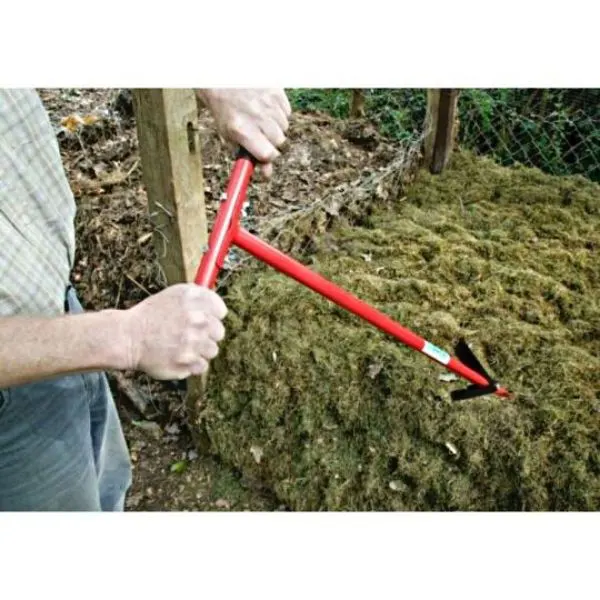
Compost aerator spikes are long, thin rods that are inserted into compost piles to aerate them.

- Compost Tumbler

A compost tumbler is a rotating container that is used to compost materials. The tumbling action helps to aerate the compost and speed up the composting process.
- Vermicompost Tower

A vermicompost tower is a vertical container that is used to compost materials using worms. The worms help to break down the materials and aerate the compost.

Post a Comment for "Compost Aerators: The Key To Faster Better Composting"